6dfabd578f
* Rename SiteConfig

* More renaming

* Update spec

* Update mandatory settings mapping

* More renaming

* e2e test fixes

* You have a rename, and you have a rename

* Spec fix

* More changes

* Temporarily disable specs

* After-merge update

* Undo rename for migration

* undo rename of DUS

* Fix DUS

* Fix merge problem

* Remove redundant DUS

* Fix specs

* Remove unused code

* Change wrong class name

* More cleanup

* Re-add missing values to constant

* Fix constant

* Fix spec

* Remove obsolete fields

* Add accidentally removed field

* Update spec

* Move methods from Settings::General to ForemInstance

* Remove unneeded model

* Change mentions of 'site config'
2.5 KiB
| title |
|---|
| Facebook Authentication |
Facebook App and Authentication
Forem allows you to authenticate using Facebook. In order to use this authentication method in local development, you will need to setup a Facebook App and retrieve its keys. Then you'll need to provide these keys to the Rails application.
Sign up
-
Sign in to your Facebook account.
-
In order to get the API keys, you will have to convert your account to a developer account.
Get API keys
-
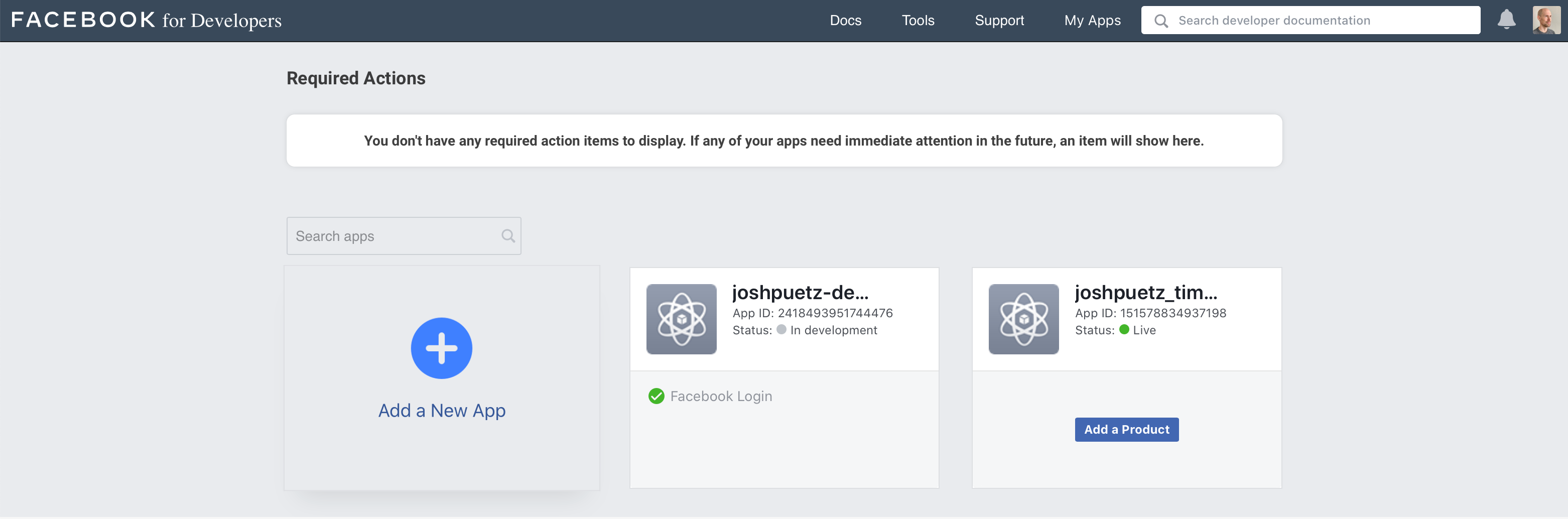
From My Apps dashboard, click on Add a New App.
-
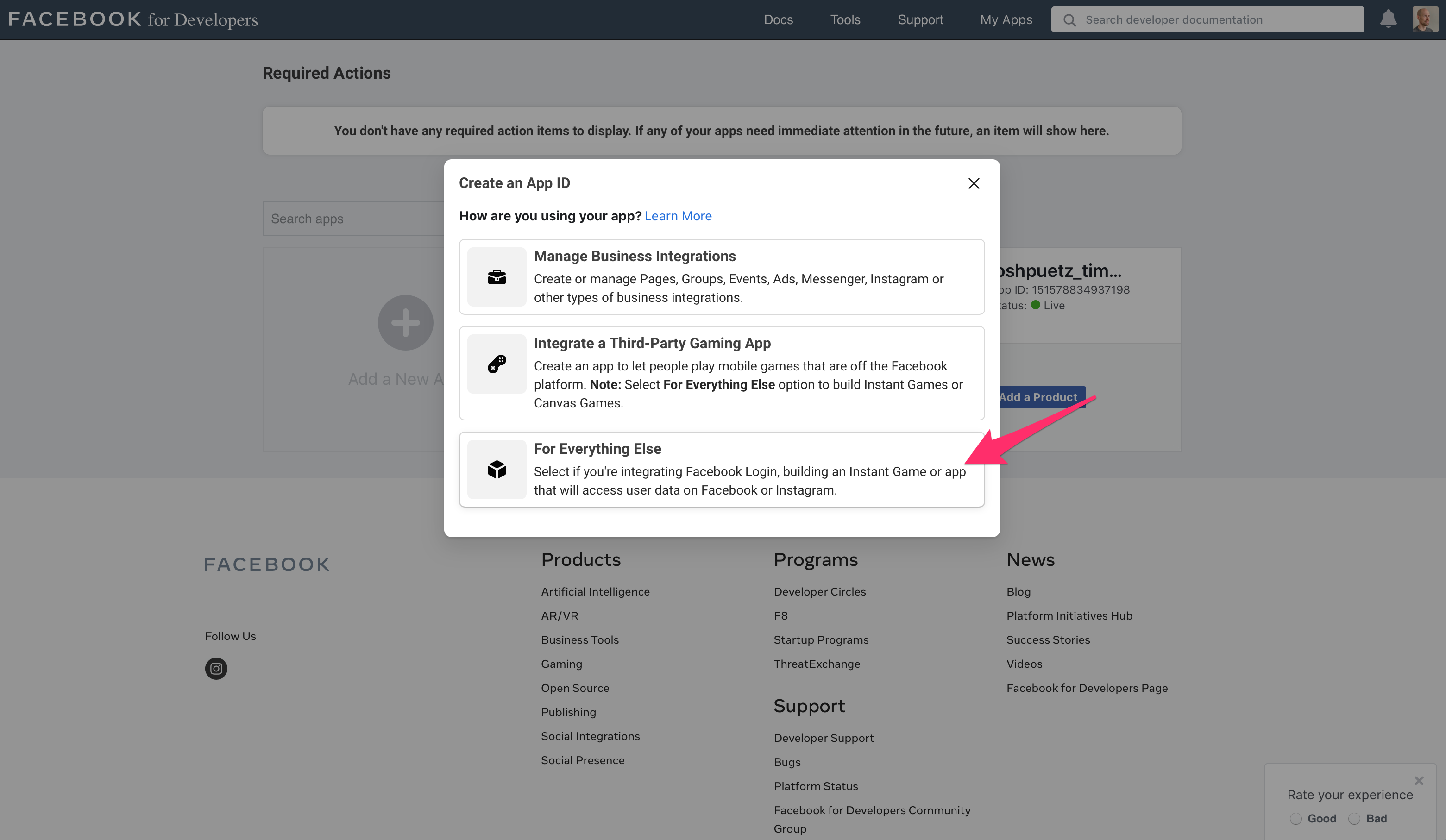
Select For Everything Else
-
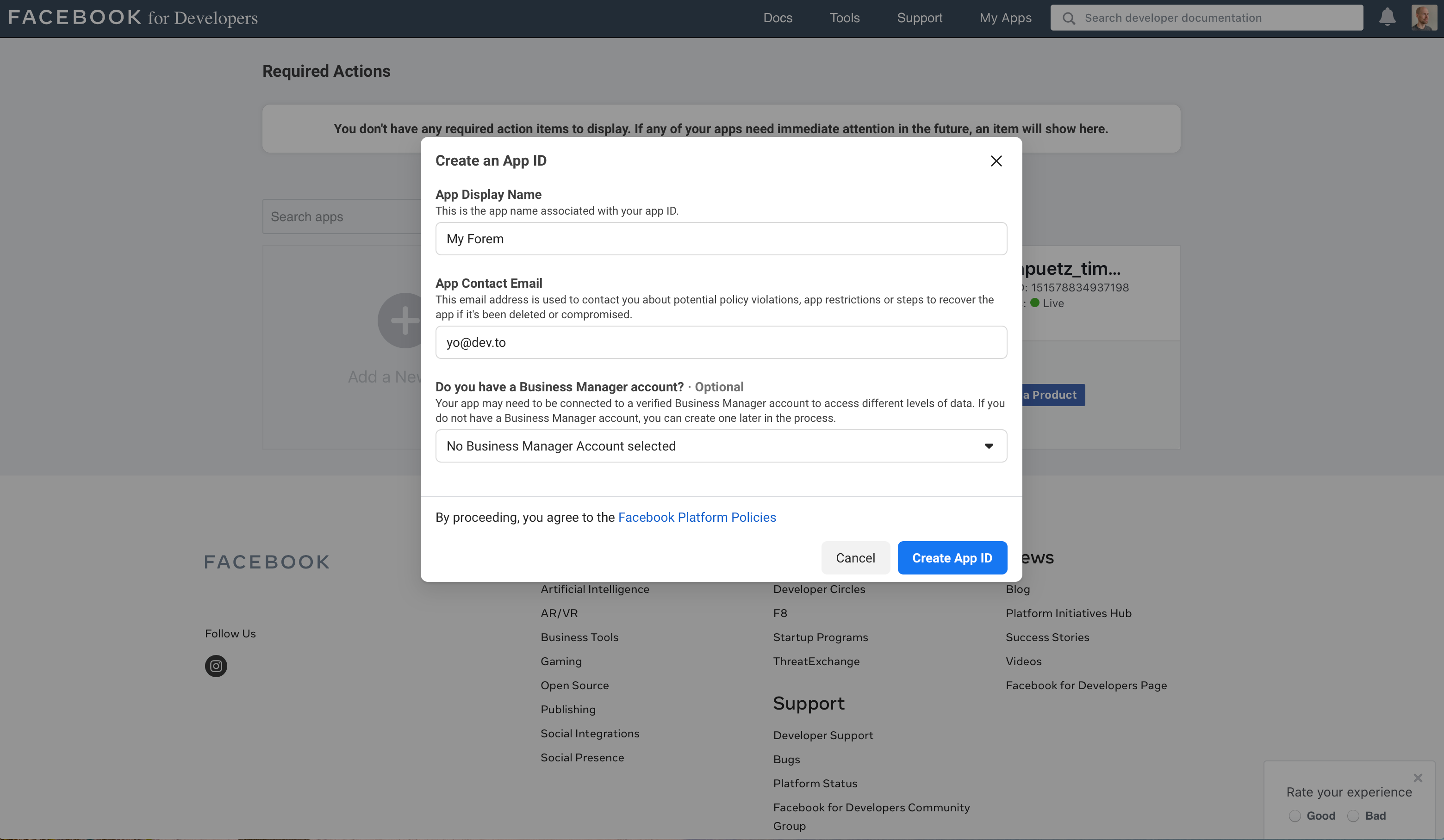
Fill in the app display name and contact email, then click on Create App ID
-
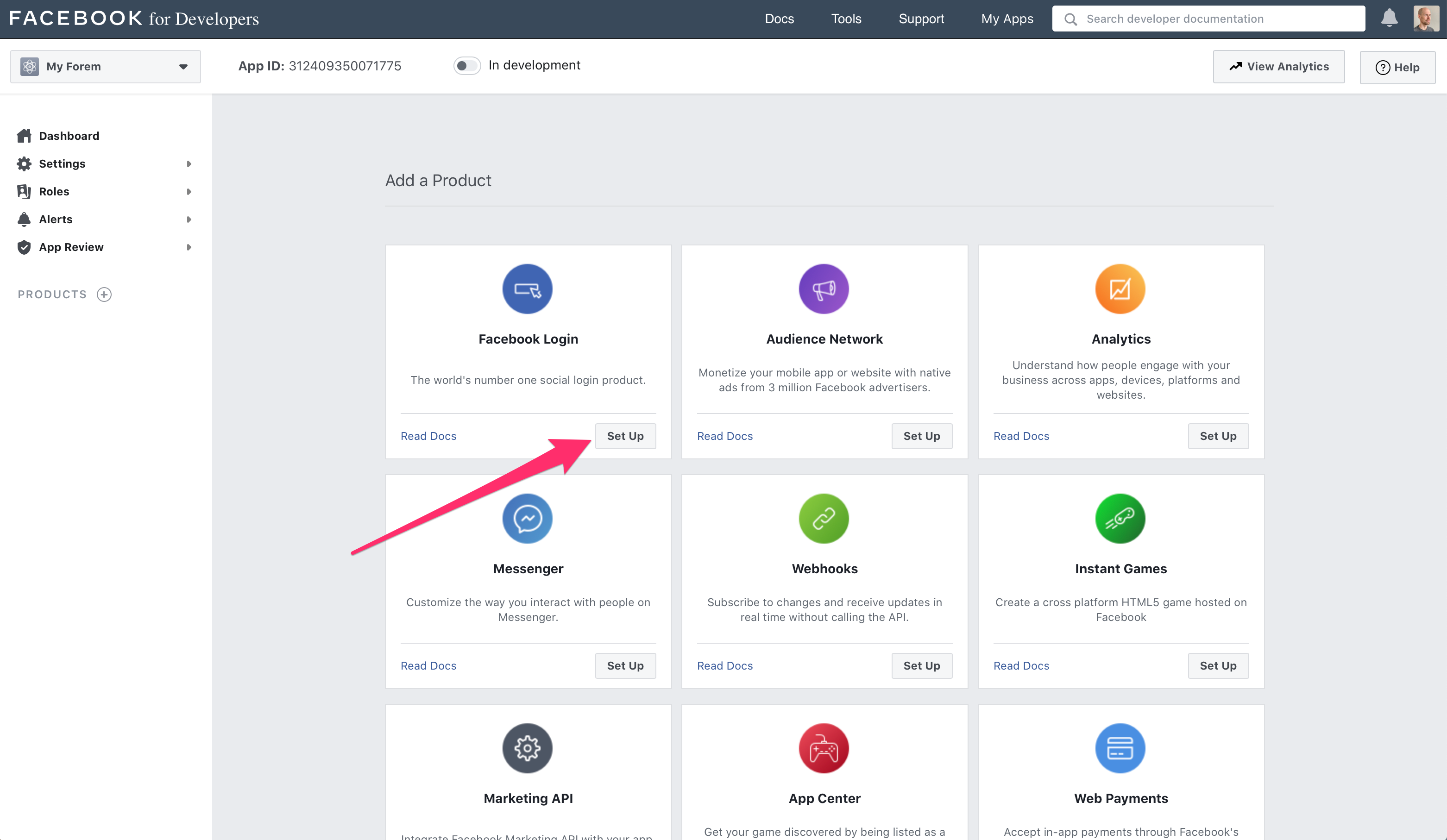
On the Add a Product screen, click Set Up under the Facebook Login section
-
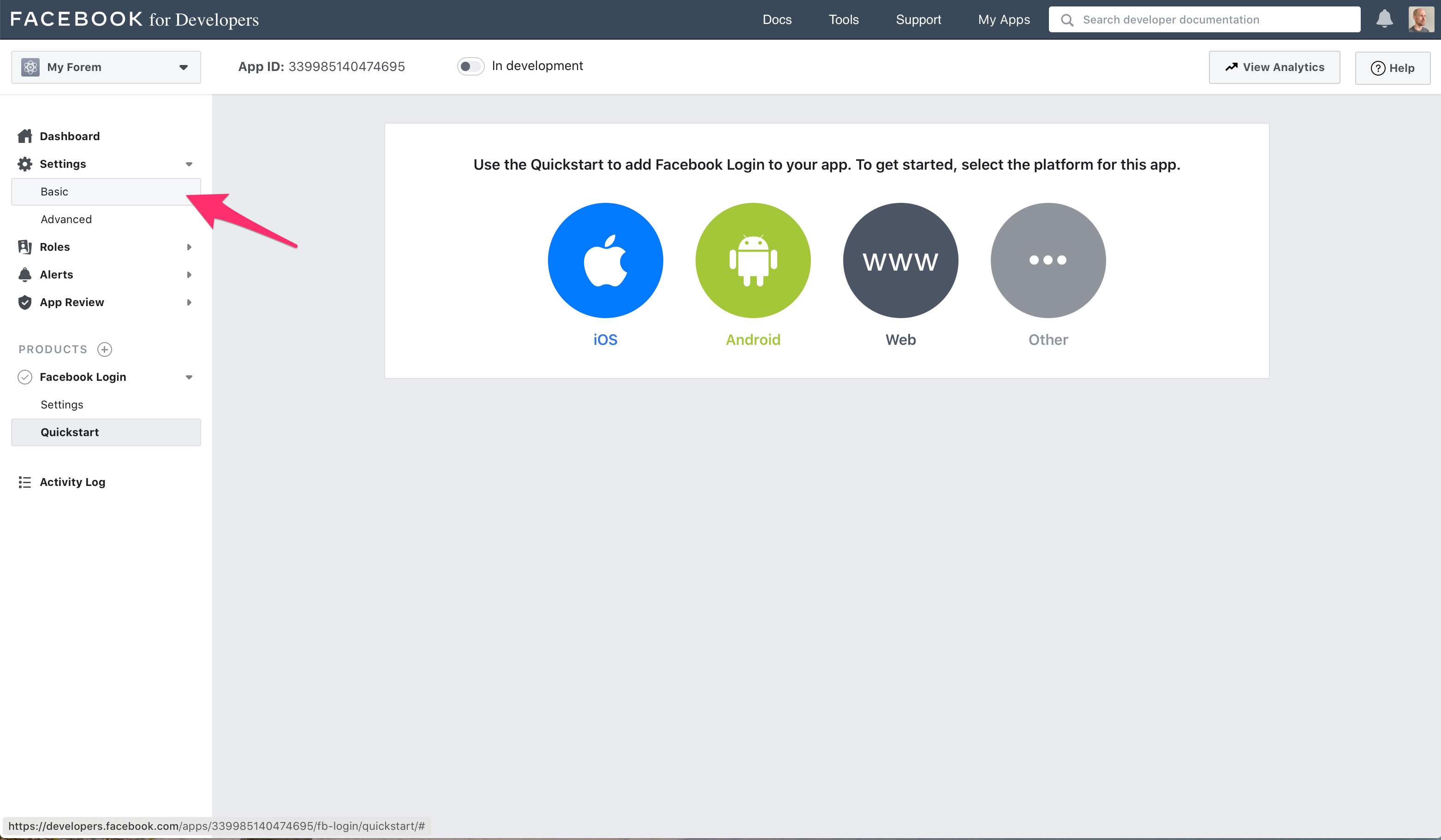
Ignore the quickstart options, and click Settings -> Basic in the sidebar
-
From the basic settings screen dashboard copy the App ID and App Secret values to your
.envfile accordingly (name of Facebook key -> name of ourSettings::Generalvariable).APP ID -> FACEBOOK_APP_ID API secret -> FACEBOOK_APP_SECRET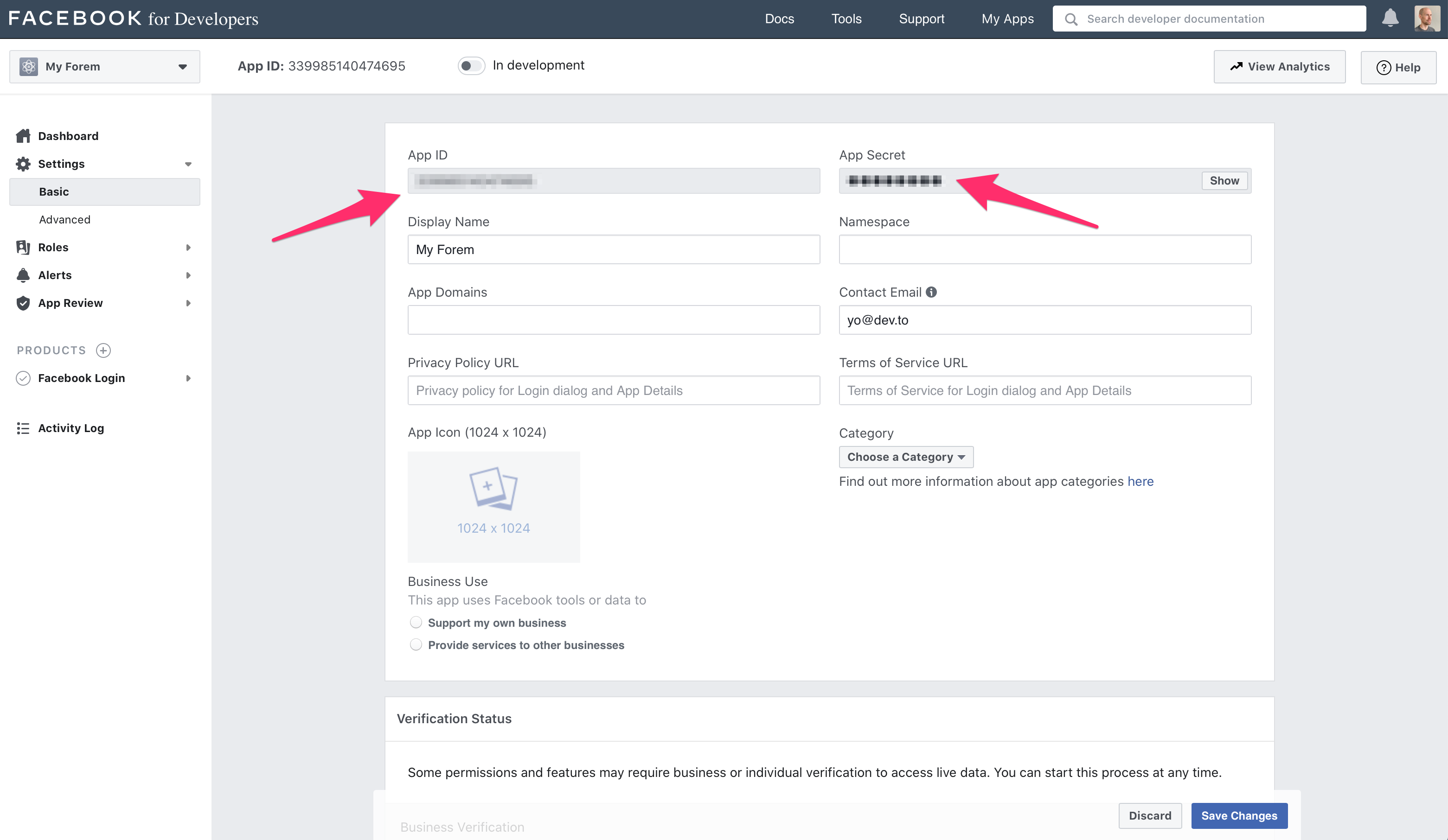
Configure the Facebook App
-
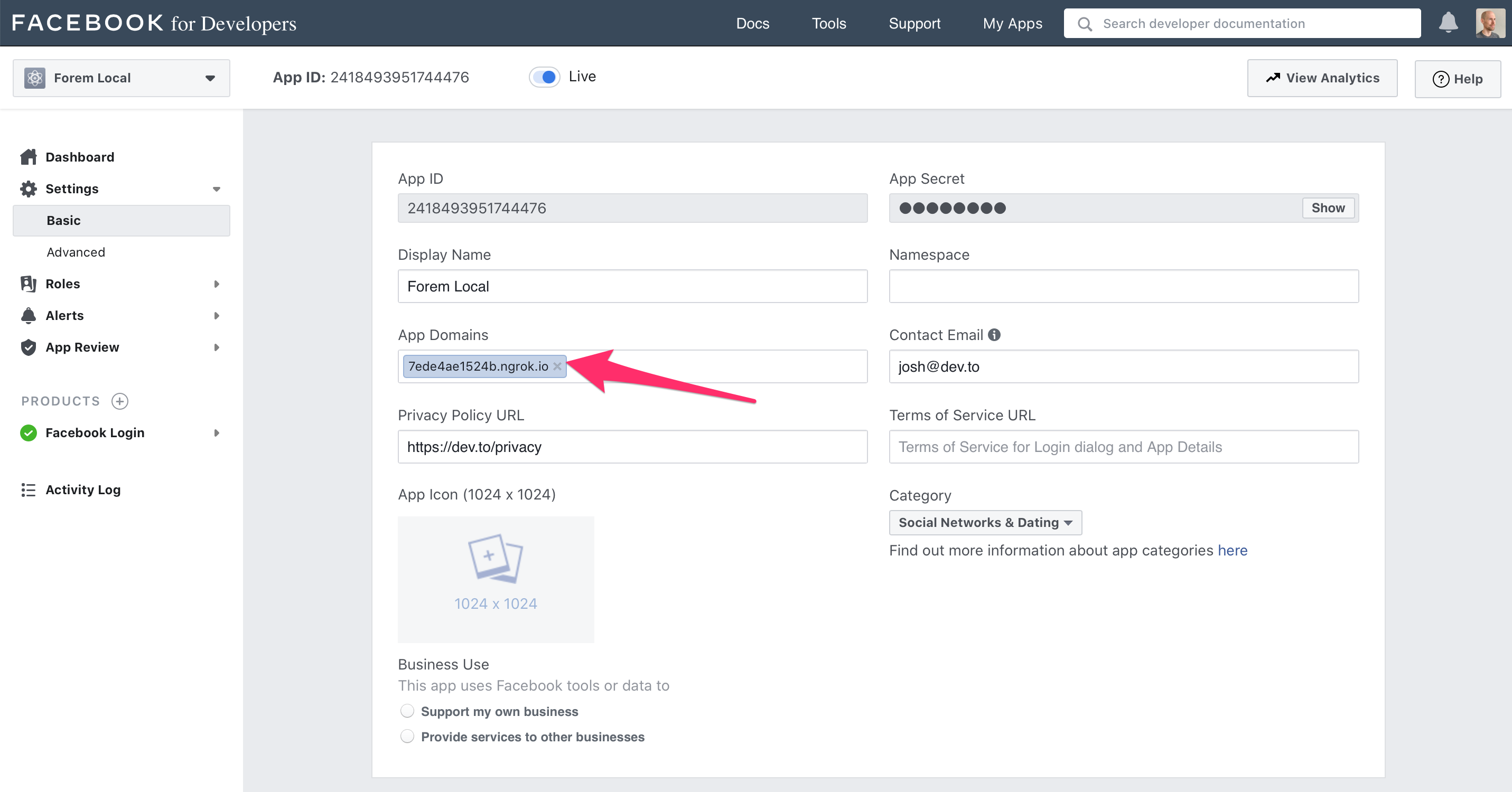
From the basic settings screen dashboard set your application's domain name in App Domains field, and be sure to click Save Changes
-
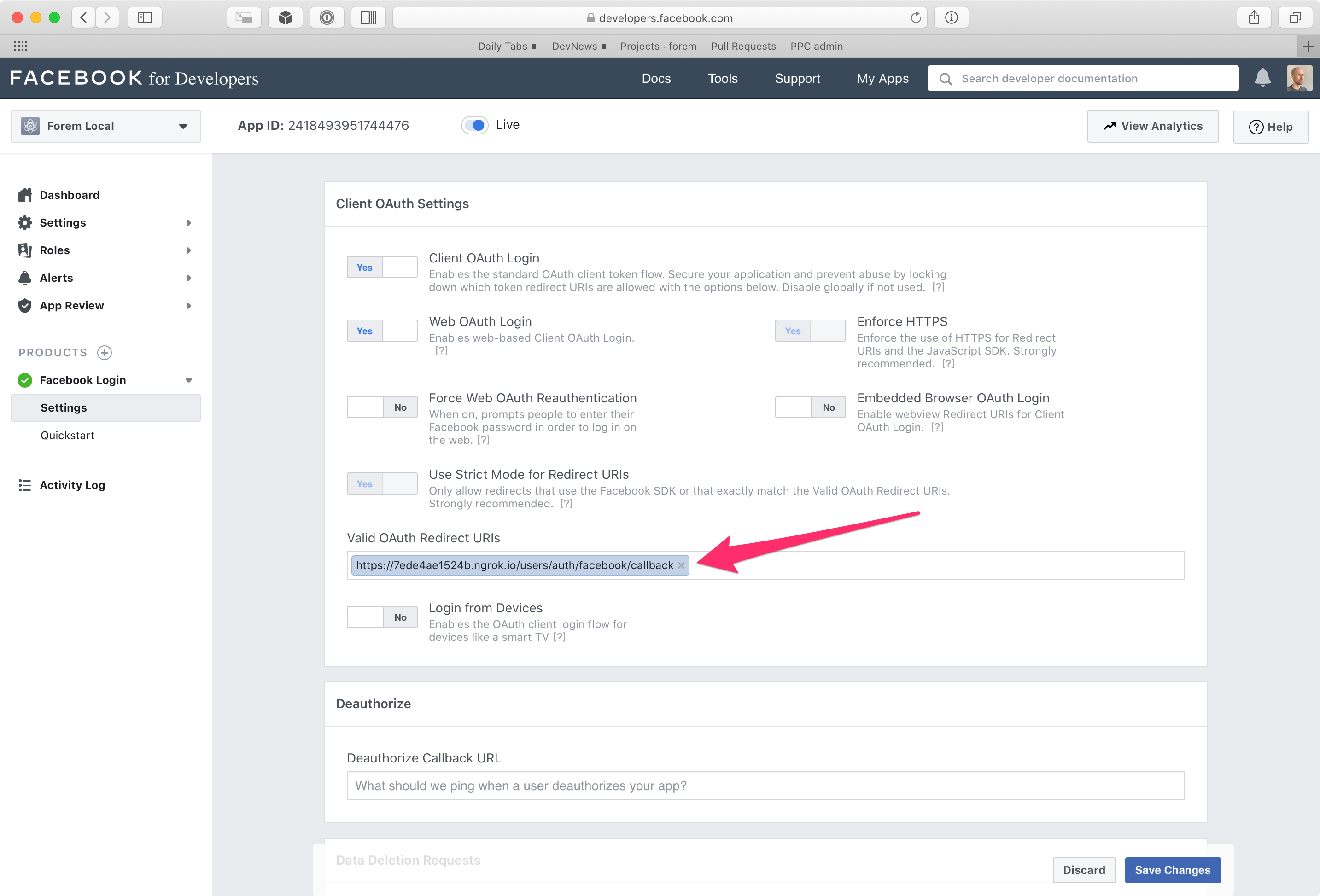
Naviate to Facebook Login --> Settings, and enter the following callback URL in the field Valid OAuth Redirect URIs:
https://<your domain>>/users/auth/facebook/callback