
30 lines
2.1 KiB
Markdown
30 lines
2.1 KiB
Markdown
---
|
|
title: Deployment and CI/CD Process
|
|
---
|
|
|
|
# Deployment and CI/CD Process
|
|
|
|
## Overview
|
|
|
|
DEV relies on GitHub and Travis to deploy continuously to Heroku. If a Pull Request is merged with a `[deploy]` in its title, it will be automatically deployed to production once the build steps complete successfully. The process currently takes about 20 minutes to complete and will need a few additional minutes before the change goes live.
|
|
|
|
## Travis steps
|
|
|
|
The following steps can be explored in our [.travis.yml](https://github.com/thepracticaldev/dev.to/blob/master/.travis.yml) and [Procfile](https://github.com/thepracticaldev/dev.to/blob/master/Procfile). Some of the steps will be parallelized in the future:
|
|
|
|
1. Travis runs the test portion of Rails code.
|
|
1. Travis runs the test portion of Preact code.
|
|
1. CodeClimate-test-reporter combines the test result and coverage from Ruby and JavaScript code then uploads it to our CodeClimate dashboard.
|
|
1. `bundle-audit` checks for any known vulnerability.
|
|
1. Travis builds Storybook to ensure its integrity.
|
|
1. Travis deploys code to Heroku.
|
|
- Heroku runs the database migrations before deployment.
|
|
1. `after_deploy` script kicks in.
|
|
- Airbrake Deploy Tracking is notified of the deployment.
|
|
1. Travis notifies the team that the process completed.
|
|
|
|
## Deploying to Heroku
|
|
|
|
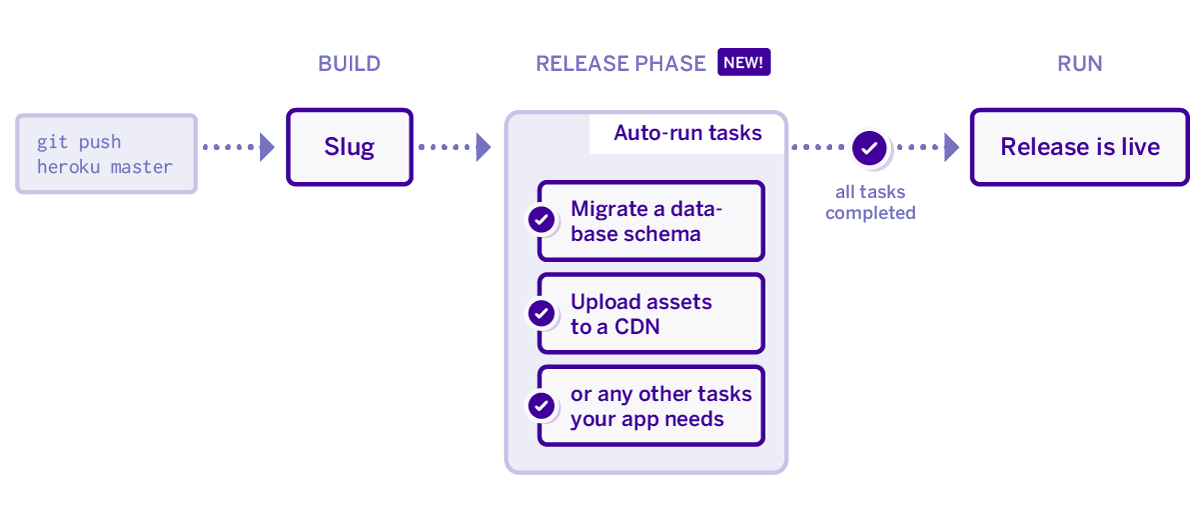
We use Heroku's [Release Phase](https://devcenter.heroku.com/articles/release-phase) feature. Upon deploy, the app installs dependencies, bundles assets, and gets the app ready for launch. However, before it launches and releases the app Heroku runs a release script on a one-off dyno. If that release script/step succeeds the new app is released on all of the dynos. If that release script/step fails then the deploy is halted and we are notified. During this release step, we have chosen to run migrations. This ensures that a migration finishes successfully before the code that uses it goes live. We deploy asynchronously, so the website is running the new code a few minutes after deploy. A new instance of Heroku Rails console will immediately run a new code.
|
|
|
|
|