
33 lines
1.2 KiB
Markdown
33 lines
1.2 KiB
Markdown
---
|
|
title: Metrics
|
|
---
|
|
|
|
## Time series data
|
|
|
|
We track point-in-time data by sending data points to Datadog using
|
|
[Statdsd](https://github.com/DataDog/dogstatsd-ruby).
|
|
|
|
Currently, we run a daily metric fetching job in `fetch.rake` which is called
|
|
via the Heroku scheduler. If we wanted to do other frequencies like hourly, etc.
|
|
we could add similar tasks.
|
|
|
|
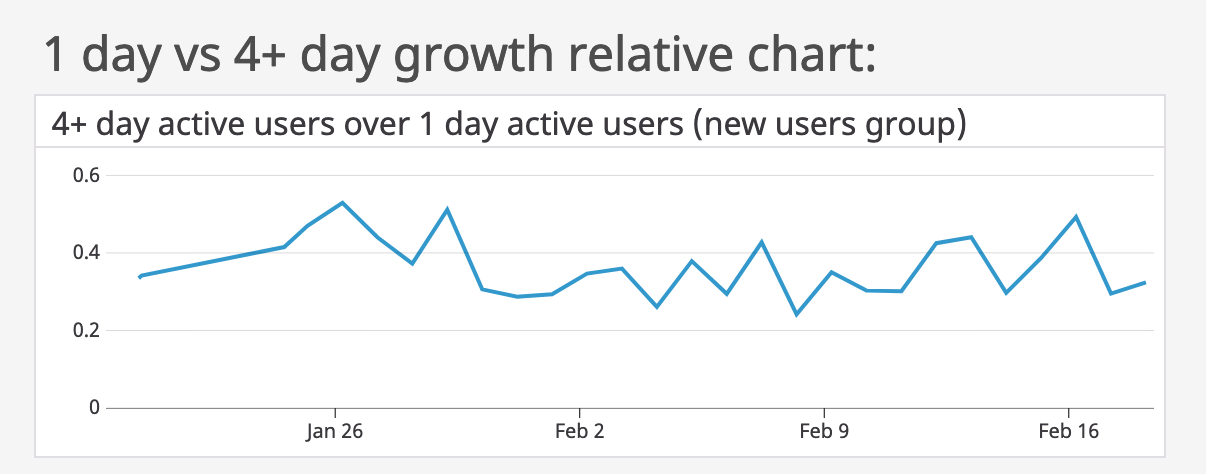
The rake task calls `Metrics::RecordDailyUsageWorker.perform_async`, which
|
|
performs algorithms to come up with data points to send, for example:
|
|
|
|
```ruby
|
|
DataDogStatsClient.count("users.active_days_past_week", one_day_users, tags: { resource: "users", group: "new_users, day_count: 1 })
|
|
```
|
|
|
|
If you want to create a new periodic data send, follow this pattern to do so.
|
|
|
|
## Vendor-Agnostic
|
|
|
|
While we currently are not vendor-agnostic in how we do this (Heroku/Datadog),
|
|
it is set up in a way that could become so in the future. The main pattern is
|
|
`Every x minutes/hours/etc. send aggregate data to warehouse where it can be examined on a timeseries basis`.
|
|
This could, in the future, be bundled right into the platform using an open
|
|
source timeseries database and data visualization.
|
|
|
|
Once in Datadog, dashboards can created using
|
|
|
|
|